
Rasmussen Gardens
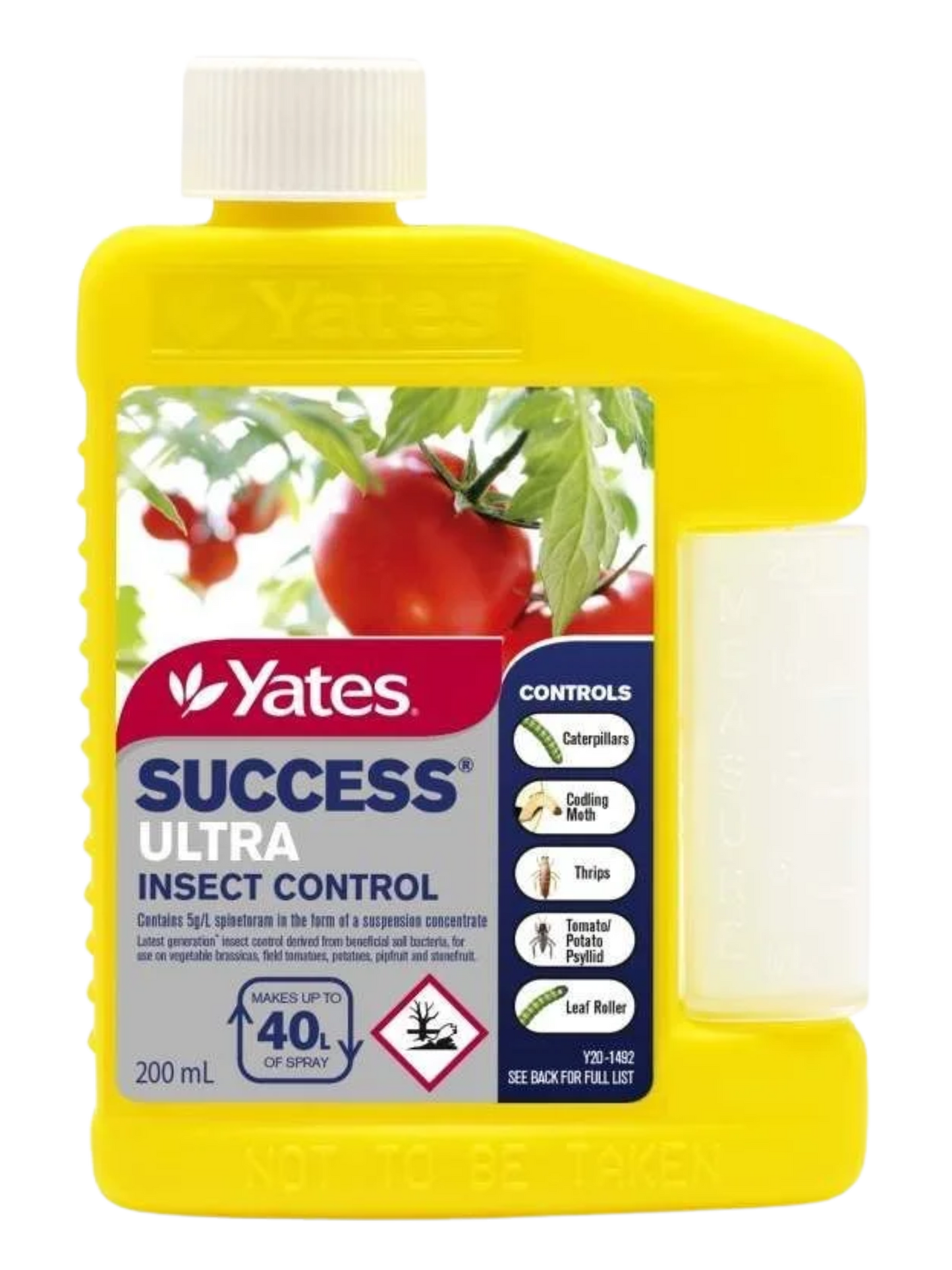
Success Ultra Insect Control 200ml Concentrate
Success Ultra Insect Control 200ml Concentrate
Couldn't load pickup availability
Success Ultra Insect Control 200ml Concentrate
A fast-acting insect control suitable for use on vegetables, herbs, fruit trees, and ornamental plants. Contains spinetoram, a naturally derived insecticide produced from beneficial soil bacteria (Saccharopolyspora spinosa), and works mainly by ingestion (pests must feed on treated tissue), with additional contact activity.
The formulation penetrates leaf tissue (translaminar action), helping control insects feeding on the undersides of leaves. Once dry, it is rainfast and provides reliable protection during active pest periods.
• Fast acting with residual control
• Suitable for edible crops when used as directed
• Rainfast once dry
Spray programme & resistance management
Apply at the first sign of pest activity and follow up as required while pests are active. Avoid routine spraying when pests are not present.
For minor pest pressure, consider using Neem horticultural soap or Neem oil first. These can be useful for early intervention and low-level infestations before moving to stronger controls.
• Do not apply more than 4 sprays per crop per season
• Rotate with products from a different mode of action group
• Always apply at the correct rate and interval
• Ensure thorough coverage, including leaf undersides
Application Rates & Follow-Up Sprays
Tomato potato psyllid (TPP)
Chillies, Tomatoes, Potatoes, and other Solanaceous crops including Tomatillo and Tamarillo
Pests: Tomato potato psyllid
Rate: 10 mL per 1 L water
How to apply:
Apply at the first sign of psyllid activity and repeat at 7–10 day intervals while pressure remains. Focus on new growth and the undersides of leaves where psyllids feed. Spray all foliage and stems, ensuring full coverage to the point of runoff on all leaves and stems.
Do not apply more than 4 sprays per crop per season.
Works mainly by ingestion, so psyllids need to feed on treated tissue. Coverage of new growth is especially important. Repeated applications are often needed where adults are present to catch new hatch cycles.
Caterpillars, leaf-mining pests & whitefly
Brassicas, Leafy Vegetables, and Herbs
Pests: Caterpillars of white butterfly, diamondback moth, looper, leaf miner larvae, whitefly
Rate: 5 mL per 1 L water
How to apply:
Spray when pests are first seen and repeat at 7-day intervals while pests are active. Spray all foliage, including the undersides of leaves, ensuring full coverage to the point of runoff on all leaves and stems.
Caterpillars often stop feeding soon after application but may take a couple of days to die. Leaf miners are best controlled early while larvae are small. Whitefly are most susceptible at the larval (nymph) stage; repeat sprays are often required to catch new hatch cycles.
Adding a wetting agent such as Yates Sprayfix helps ensure thorough leaf coverage.
Codling moth
Apples and Pears
Pests: Codling moth
Rate: 5 mL per 1 L water
How to apply:
Begin spraying from petal fall and repeat at 14-day intervals while moth activity continues. Spray all foliage and developing fruit, ensuring full coverage to the point of runoff.
Do not apply more than 4 times per season.
Best results are achieved when sprays are timed to the start of moth activity and repeated consistently through pressure periods.
Leafrollers
Pipfruit and Stonefruit
Pests: Leafroller
Rate: 5 mL per 1 L water
How to apply:
Spray every 14 days from petal fall while pests are active. Ensure full coverage to the point of runoff on all leaves and stems.
Young larvae are easier to control before leaves roll tightly and protect feeding sites.
Oriental fruit moth
Stonefruit
Pests: Oriental fruit moth
Rate: 10 mL per 1 L water
How to apply:
Spray every 14 days from petal fall. Ensure full coverage to the point of runoff on all leaves and stems.
Repeated applications are often required during active moth periods due to overlapping generations.
Adding a wetting agent such as Yates Sprayfix helps ensure thorough leaf coverage.
Thrips
Pests: Thrips
Rate: 5–10 mL per 1 L water
How to apply:
Spray during active infestations and repeat at 10–14 day intervals. Spray all foliage, ensuring full coverage to the point of runoff on all leaves and stems.
Thrips often hide in flowers and tight growth tips, so very thorough coverage is essential. Use the higher rate when pressure is high.
Adding a wetting agent helps ensure thorough leaf coverage.
Aphids
Pests: Aphids
Rate: 5 mL per 1 L water
How to apply:
Spray when aphids are first observed and repeat as required while populations persist. Focus on soft new growth and leaf undersides, ensuring full coverage to the point of runoff.
Effective on aphids, with rapid knockdown often seen on soft-bodied species. Works mainly by ingestion, so aphids need to feed on treated tissue.
For light infestations, neem horticultural soap or neem oil may be sufficient.
Withholding period
Normally a short withholding period of 3 days before harvesting fruit when used as directed. Always refer to the product label for crop-specific withholding periods.
Protecting bees & beneficial insects
• Do not spray plants that are in full flower
• Apply early morning or late evening when bees are less active
• Avoid spraying open blooms and focus on foliage only
• Once dry, risk to bees is reduced
Store in a cool, dry place out of reach of children.
Always read and follow the label instructions before use.
Share